How to Register a Salvage Vehicle in California: Step-by-Step Guide
If you recently purchased or repaired a salvage vehicle, you may be wondering what it takes to legally register it in California.
The process is different from registering a standard vehicle because the California DMV requires additional inspections, paperwork, and verification before issuing registration and plates.
This guide explains how to register a salvage vehicle in California, what documents you need, when VIN verification is required, and how to avoid common delays.
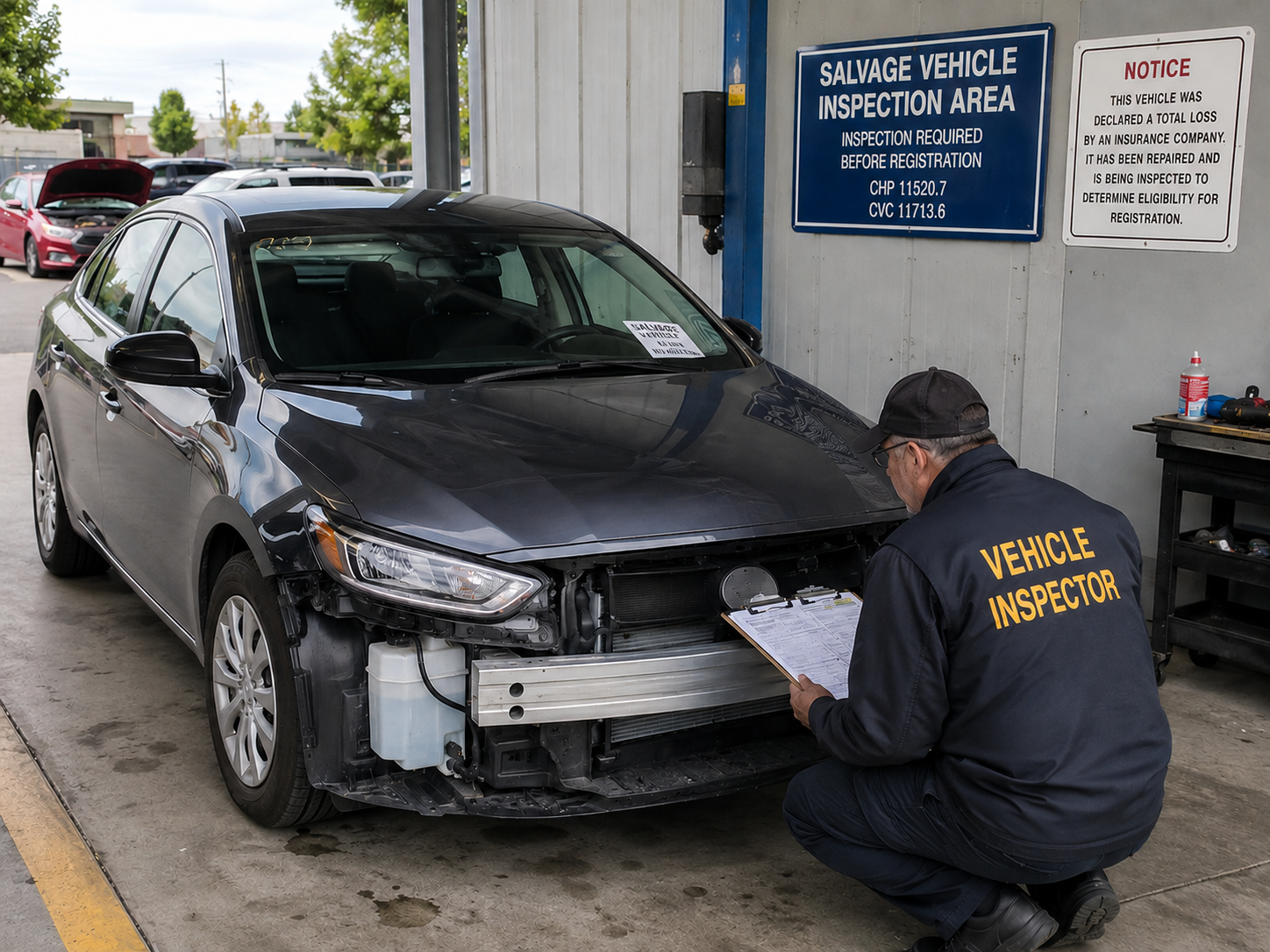
California salvage vehicle being inspected for registration after repairs
What Is a Salvage Vehicle?
A salvage vehicle is a vehicle that has been declared a total loss by an insurance company or vehicle owner due to:
Collision damage
Flood damage
Fire damage
Theft recovery
Vandalism
Other major damage
Once repaired and made roadworthy again, the vehicle must go through the revived salvage registration process before it can legally operate on California roads.
Step 1: Gather Your Ownership Documents
Before beginning the registration process, collect:
Required Documents
Salvage Certificate
California Title (if applicable)
Bill of Sale
Repair receipts
Parts receipts
Proof of ownership
Keep all receipts organized.
The DMV, CHP, or other agencies may request documentation showing where replacement parts were obtained.
Step 2: Complete Required Repairs
The vehicle must be repaired before registration can be completed.
Common repairs include:
Body damage
Lighting systems
Safety equipment
Airbags
Mechanical repairs
Emissions-related repairs
Make sure all repairs are completed before scheduling inspections.
Step 3: Obtain a California VIN Verification
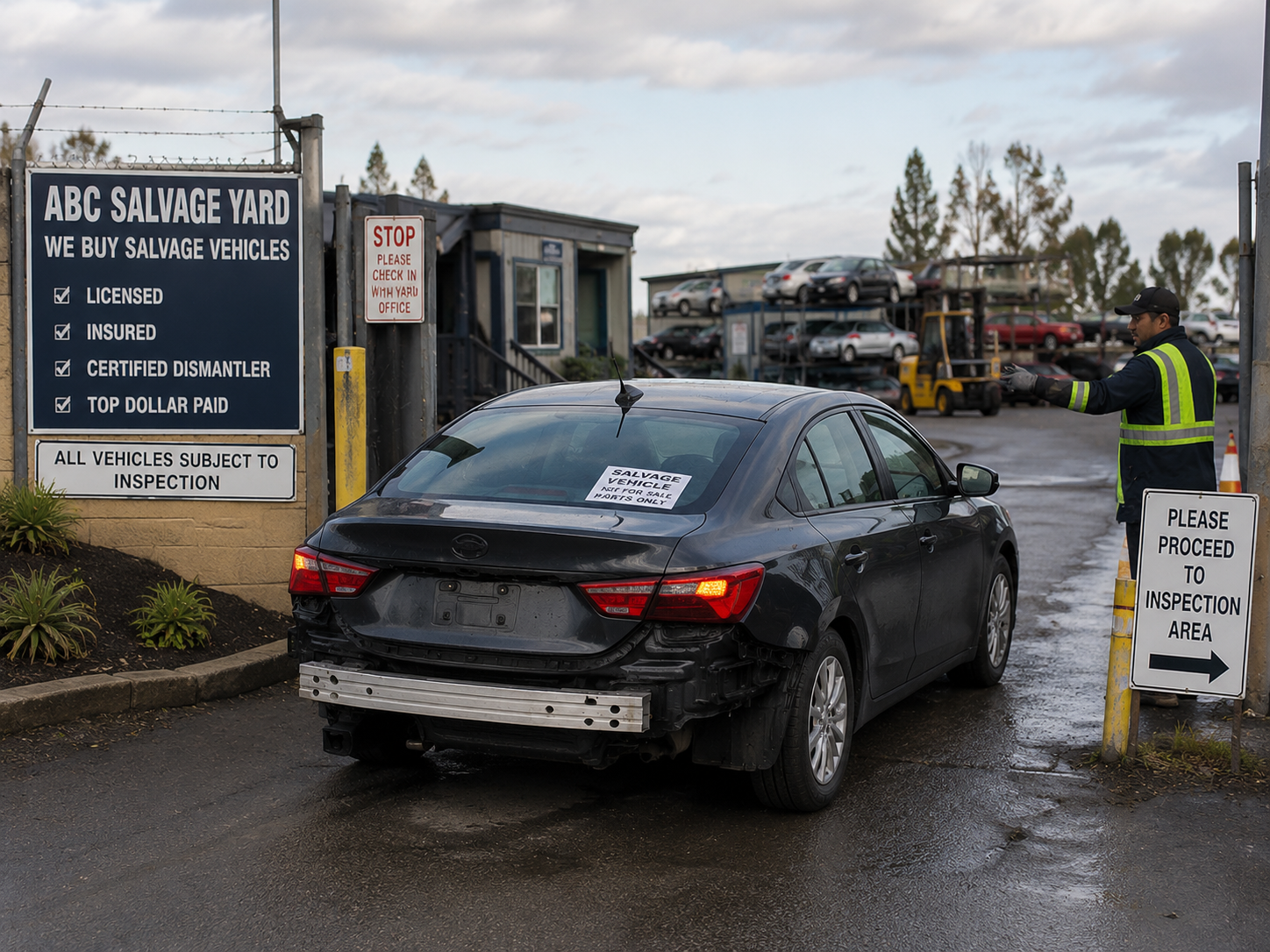
Revived salvage vehicle preparing for California CHP inspection
Most revived salvage vehicles require VIN verification.
The VIN verification confirms:
Vehicle Identification Number (VIN)
Make and model
Year
Vehicle configuration
Ownership records match the vehicle
Need VIN Verification for a Salvage Vehicle?
Rollin VIN Verifiers provides mobile VIN verification services throughout Southern California for qualifying vehicles. We come to your home, business, dealership, storage facility, or fleet yard.
A VIN verification may only be completed by:
The California Highway Patrol (CHP)
VIN verification is often one of the first steps in the revived salvage registration process.
California VIN Verification California Highway Patrol Inspections
Step 4: Schedule a CHP Inspection (If Required)
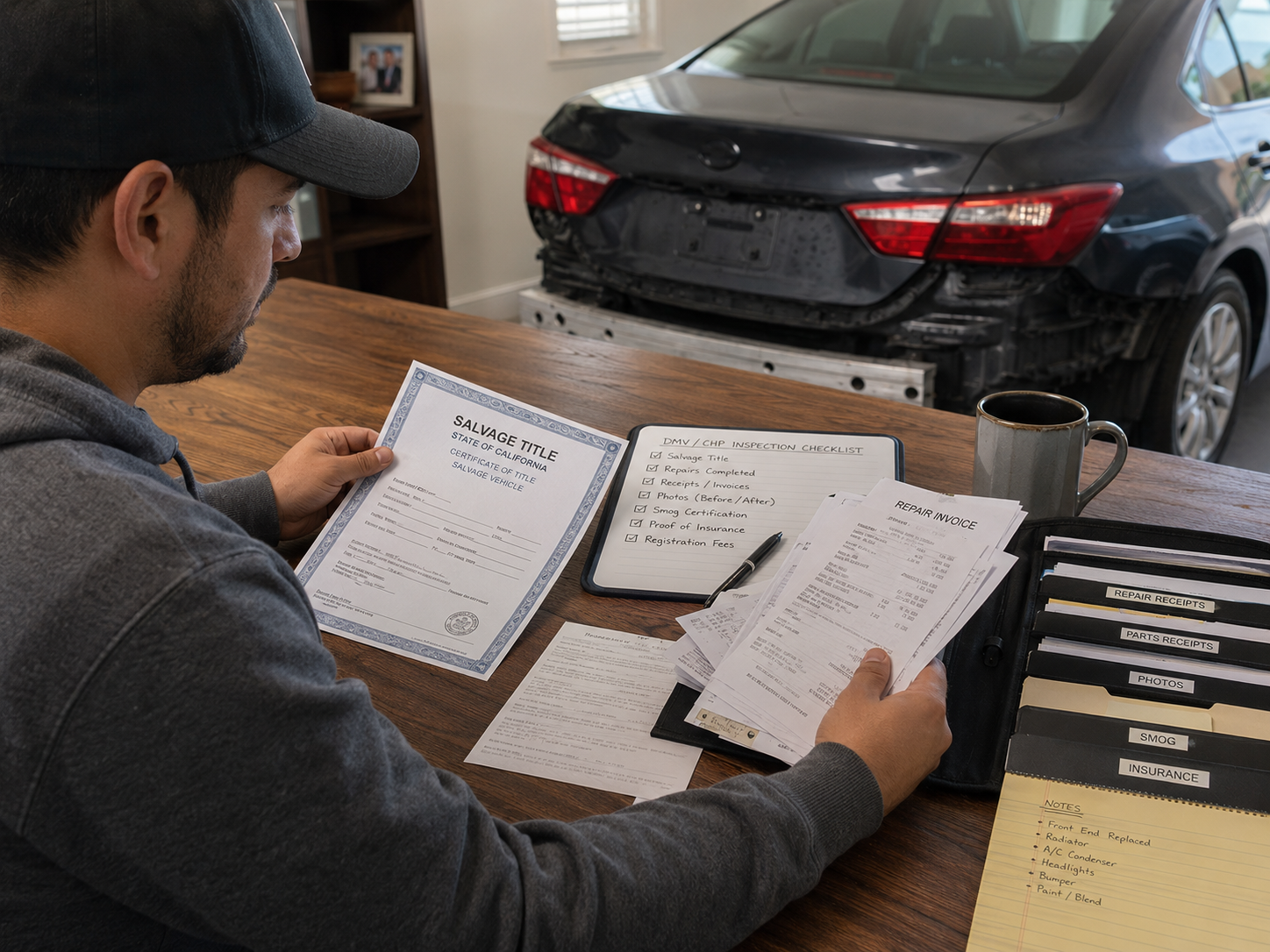
Vehicle owner organizing salvage title paperwork and repair receipts
Many revived salvage vehicles require inspection by the California Highway Patrol (CHP).
The CHP inspection focuses on:
Vehicle identity
Stolen parts investigations
VIN integrity
Major component verification
The CHP appointment is separate from VIN verification and may require advance scheduling.
Bring:
Salvage certificate
Repair receipts
Ownership documents
Driver license
Step 5: Obtain a Brake and Lamp Inspection
California often requires:
Brake Inspection
Verifies:
Brake system functionality
Safety compliance
Lamp Inspection
Verifies:
Headlights
Brake lights
Turn signals
Other required lighting equipment
Inspections must generally be completed by licensed inspection stations.
Step 6: Complete Smog Requirements
If applicable, the vehicle must pass California emissions requirements before registration can be finalized.
Depending on the vehicle, this may include:
Smog inspection
OBD testing
Emissions compliance verification
Requirements vary based on:
Vehicle year
Fuel type
County
Vehicle classification
Step 7: Submit Your Documents to DMV
After inspections are complete, submit your documents to the California DMV.
Typical documents include:
Salvage Certificate
Application for Title or Registration
CHP documentation (if required)
Brake and Lamp Certificates
Smog Certificate
Registration fees
The DMV will review all documentation before issuing registration.
Common Mistakes That Delay Salvage Vehicle Registration
Many vehicle owners experience delays because of:
Missing Receipts
Keep receipts for:
Parts
Repairs
Labor
Vehicle purchase
Scheduling CHP Too Late
CHP appointments may take time to obtain.
Schedule early whenever possible.
Incomplete VIN Verification
Make sure the VIN verification is completed correctly and matches all supporting documentation.
Missing Required Inspections
Verify which inspections apply before visiting DMV.
Frequently Asked Questions
Does a salvage vehicle need VIN verification in California?
In many cases, yes. VIN verification is commonly required during the revived salvage registration process.
Can I register a salvage vehicle online?
Most revived salvage registrations require in-person processing because inspections and original documentation must be reviewed.
Does CHP inspect every salvage vehicle?
Not always. Requirements vary depending on the vehicle and DMV instructions.
How long does the salvage registration process take?
Processing time depends on inspections, CHP appointment availability, and DMV workload.
Can a mobile VIN verifier help with a salvage vehicle?
A qualified California VIN verifier may be able to perform VIN verification when the vehicle is eligible. Requirements vary based on vehicle circumstances and DMV regulations.
Final Thoughts
Registering a salvage vehicle in California involves more than a standard registration transaction. Proper documentation, VIN verification, inspections, and DMV review are often required before the vehicle can legally return to the road.
Understanding the process ahead of time can help avoid delays and ensure your revived salvage vehicle registration is completed as efficiently as possible.
If you need assistance determining whether your vehicle requires VIN verification, professional guidance can help you understand the next steps before visiting the DMV.
Rollin VIN Verifiers is available for all your VIN Verification needs:
Schedule Mobile VIN Verification Today
Whether you're registering a revived salvage vehicle, out-of-state vehicle, trailer, RV, or commercial truck, Rollin VIN Verifiers provides convenient mobile service throughout Southern California.
